Name specific self-service actions in the footer, not one Contact Us link
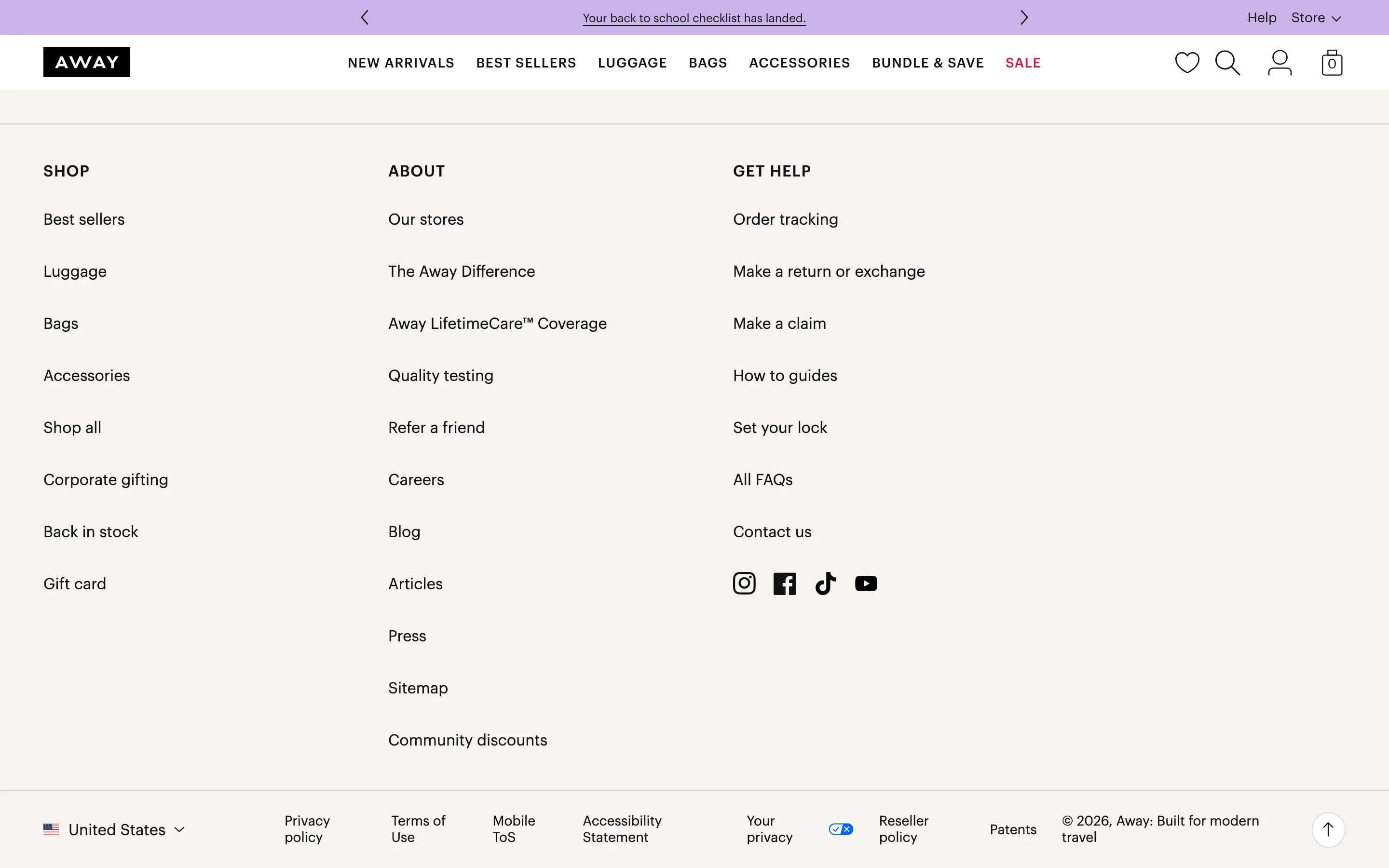
The footer's Get Help column names specific self-service actions, order tracking, returns, warranty claims, lock setup, instead of routing every request through one Contact Us link.
What it is
The footer's "Get Help" column lists specific self-service actions, "Order tracking", "Make a return or exchange", "Make a claim" for a lifetime warranty, "How to guides" and product-setup instructions, as their own named links, rather than a single "Contact Us" link that starts every request the same way.
Why it works
Most post-purchase questions have a specific, resolvable answer that does not require a person on the other end at all: where is my order, how do I start a return, my product is damaged and covered by warranty, how do I set it up. Routing all of them through one generic "Contact Us" link forces every shopper, regardless of how simple their issue is, into the same queue as someone with a genuinely unresolvable problem. Naming each self-service path individually lets the shopper with a common issue resolve it in the same click that would otherwise have just opened a contact form.
How to test it
- Hypothesis
- Naming specific self-service actions in the footer's help column will lift self-service resolution rate, because shoppers with a common, resolvable issue can act directly instead of funneling through the same generic contact path as every other request.
- Primary metric
- Self-service resolution rate (footer help-column sessions that complete an action without contacting support)
- Guardrail metric
- Post-contact customer satisfaction score, which could fall if shoppers who fail to resolve their issue through the named self-service links give up instead of escalating to a support contact
Related ideas
Want this tested on your store?
We run the experiment, call the result honestly, and get paid on what it adds.
See the performance program